How to read a seat map
A plain English guide to aisles, exit rows, bulkheads, and cabin codes on Pick Your Row schematics.
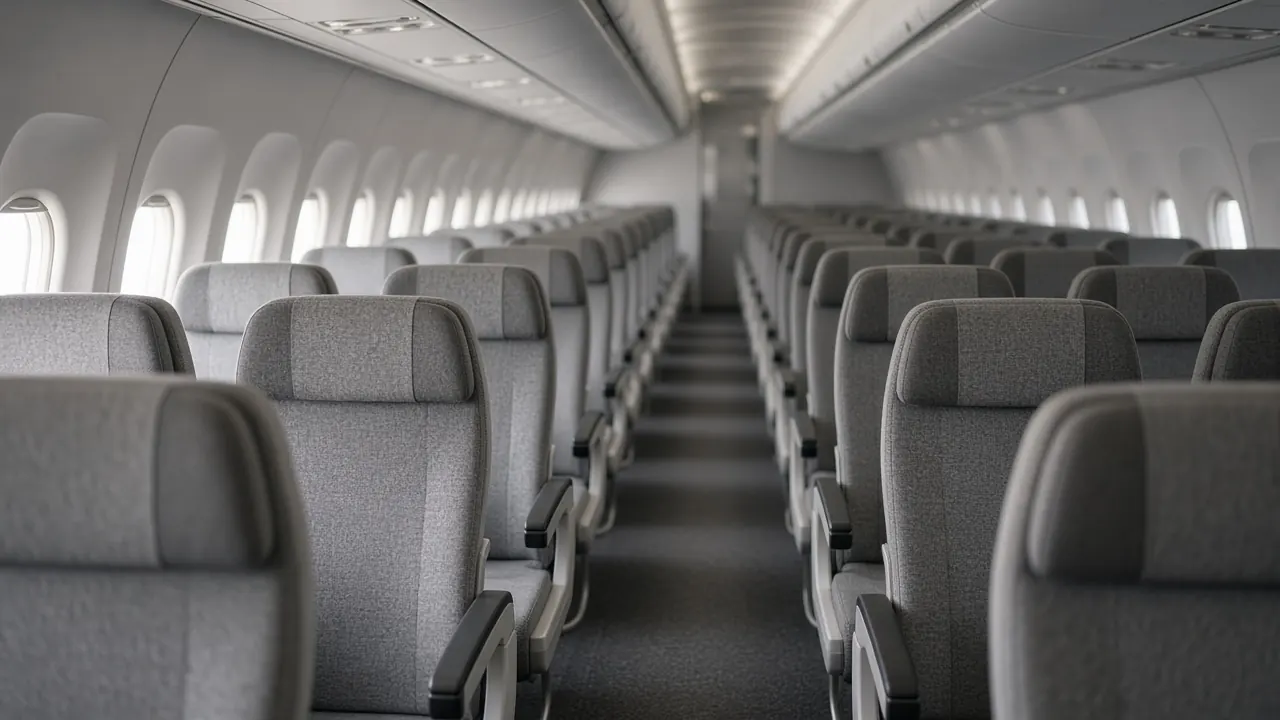
Pick Your Row seat maps are original schematic drawings. They are not official airline diagrams, and they are not copies of maps from any other publisher. Use them to learn how a cabin is arranged before you open the carrier tool for the flight you booked. If our drawing and the airline map disagree, trust the airline. We are not affiliated with any carrier. A schematic is a planning sketch, not a seat you have been assigned.
Rows run from the nose toward the tail, with the front of the aircraft at the top of the page. Seat letters run from left to right as you look forward. On many narrow body jets the left window is A and the right window is F, but the alphabet is not universal. Some cabins skip letters. Some wide body cabins repeat the pattern around a second aisle. Read the letters printed on the map in front of you.
Gaps between letter groups are aisles. A cabin shown as three seats, a gap, and three seats is a single aisle layout. Three, four, then three, or three, three, then three, are common wide body patterns. Those counts describe geometry, not comfort. The seat map glossary defines layout strings, pitch, and the other short labels used on these pages.
Exit markers highlight doors or exits over the wing that would be used in an evacuation. Legroom there is often better than a standard row, and the rules are stricter. For U.S. airlines operating under part 121, 14 CFR 121.585 covers seats with direct access to an exit and seats in the path other people would cross to reach that exit. A passenger under 15 years of age may not sit in those seats. The airline also has to judge whether someone can perform the assist functions, including when that person is caring for a small child. Read exit row tips before you pay, and use the regulation link in the sources on this page.
A bulkhead is the first row of a cabin section, facing a wall, a divider, or a curtain. Nobody reclines into your knees. That open space is not the same product as an exit row. Bags under the seat are often restricted during taxi, takeoff, and landing, and the tray table may fold out of the armrest. Some of those walls also accept a bassinet. The bulkhead seats guide covers the surprises that a pretty gap on a map hides.
Lavatory and galley symbols are abstract markers, not a measured floor plan. Sitting beside them can mean foot traffic, bright light, smells, and cart noise. Our scores treat that as caution, not a ban. A traveler who needs the restroom often may still choose it on purpose. Someone hoping to sleep usually should not. Pair this page with quiet seats versus convenient seats when the map shows both a short walk and a busy service zone.
A window letter marks the outer seat in a block. It does not promise a clear pane of glass. Over the wing, next to a door, or beside a structural panel, you can hold a window letter and still face a wall. Window seats and window alignment explains how to think about views on a schematic that was never a pane by pane survey.
Layouts vary by registration. Airlines retrofit cabins, swap aircraft, and keep more than one interior under the same type name. Confirm the aircraft on your booking, then confirm the live seat map on the day you fly. The aircraft index groups the types we have drawn. If you already know the carrier, start from a hub such as Delta seat maps and open the config that matches your ticket.
Scores on these maps are editorial opinions about space and location. They are not safety ratings, and they are not a promise that an upsell is worth the money. The methodology page separates those opinions from the regulatory facts we cite. Open the best seats index for a shortlist, then verify the row with the airline before you pay.
FAQ
Are Pick Your Row seat maps official airline diagrams?
No. They are original illustrative schematics. Pick Your Row is not affiliated with any airline. If our drawing and the carrier map disagree, use the carrier map for the seat you buy.
What do the gaps between seat letters mean?
Gaps are aisles. Three seats, a gap, and three seats is a single aisle cabin. Wider jets add a second aisle and another block of letters. Letters run from left to right as you look toward the nose, and some airlines skip letters.
Why are some rows marked as exits?
Those markers show doors or exits over the wing that would be used in an evacuation. The space is often larger. On U.S. part 121 flights, federal rules cover who may sit in an exit seat, including a minimum age of 15, and the airline can move you if you do not qualify.
Does a window letter guarantee a view?
No. A window letter is the outer seat in that block on our schematic. The wing, a door area, or a structural panel can leave you looking at a wall or a partial pane. Check the airline map for your aircraft if the view matters.
Do these maps stay the same for every aircraft of that type?
No. Two aircraft with the same marketing name can have different cabins after a retrofit or a fleet change. Treat the page as a typical pattern, then confirm the type and the live map with the airline before departure.
Sources and references
Outbound links to authoritative public pages. Regulatory and consumer-rights material is fact; our seat scores remain editorial. See also the Methodology & sources page.
- U.S. eCFR — 14 CFR § 121.585 Exit seating . Federal rule defining exit seats and passenger suitability criteria for U.S. part 121 carriers (facts; not our editorial score).
- IATA — Save a Life, Not a Bag (evacuation safety) . Industry passenger education on evacuation behavior (leave bags, follow crew). Supported publicly by FAA/EASA messaging.
- ICAO — Safety . International Civil Aviation Organization public safety portal (standards framework; not a seat map).
- FAA — Travelers . FAA public traveler safety and consumer information hub.
Browse airline seat maps Methodology More guides
Related guides
- Exit row tips before you select. What exit row seats usually mean for space, rules, storage, and who should skip them.
- Bulkhead seats: pros and cons. First row cabin seats explained, with bassinet notes, foot space, and common surprises.
- Aisle vs window: how to choose. A practical comparison of aisle and window seats for rest, access, views, and when a middle seat is still fine.
- How Pick Your Row scores work. What our 1–10 editorial seat scores mean, which tags we apply, how we separate editorial opinions from regulatory facts, and why scores are planning tools — not guarantees.