Quiet seats vs convenient seats
How to weigh a faster exit, lavatory traffic, and mid cabin calm when picking a row.
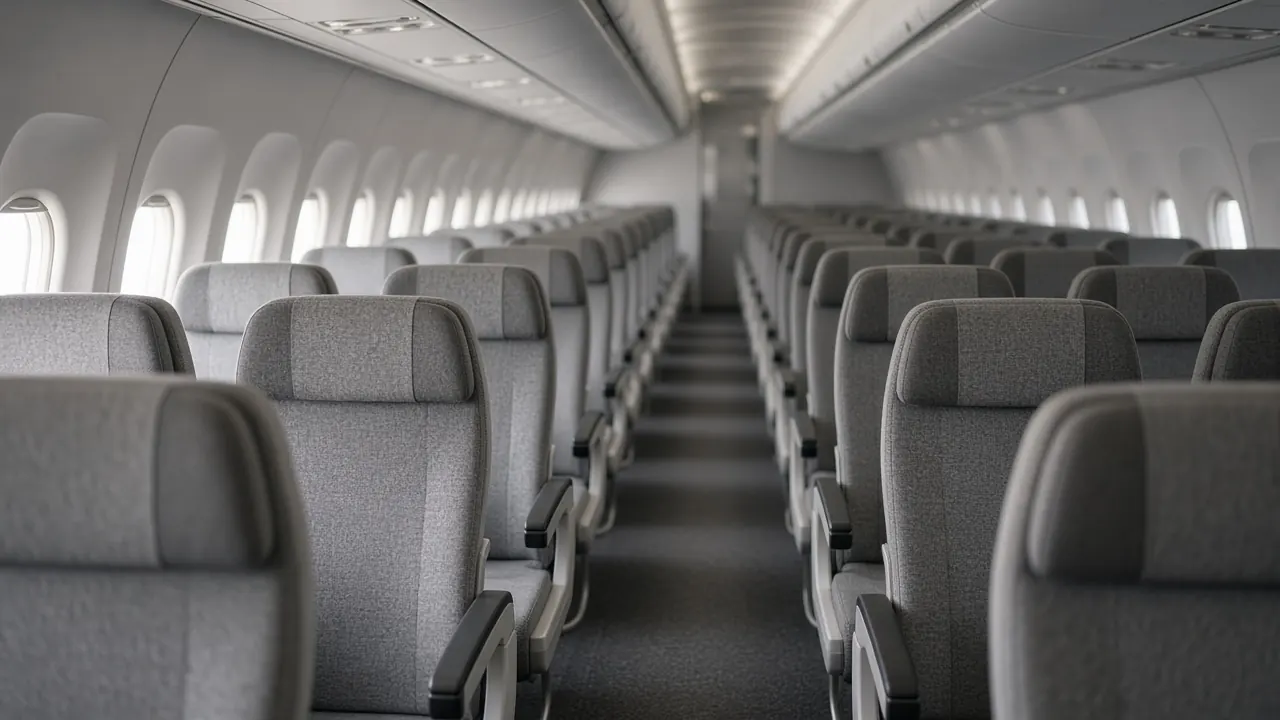
Quiet and convenient pull apart on most jets. A convenient seat shortens a walk you will repeat, or it gets you off sooner when a connection is tight. A quiet seat avoids the lavatory queue, the galley lights, and the cart that pauses beside you. You rarely get both. Pick the goal that matters on this flight.
Rear cabin seats win on one kind of convenience and lose on another. The aft lavatories are often the ones you can reach without walking the length of economy, which matters if you get up often. The same spot means you hear the door, notice the smell, and watch a line form in the aisle. A rear galley adds crew conversation on top of that. Noise near galleys and lavatories is the checklist for those symbols before you call a cheap rear seat a bargain.
Leaving the airplane is the clearer pattern. On most flights the cabin empties from the front, so a forward aisle is the convenient seat when you have a connection or you simply want to be in the terminal. Boarding is less predictable. Some airlines board the rear of economy early. Others board by fare brand, which can put a forward preferred seat on the aircraft before a rear seat. Do not pick a row only because you hope it will be called first. Forward or aft cabin is the longer version of the front versus back choice.
Forward economy is usually calmer and quicker to leave, and it is where airlines put preferred fees on ordinary pitch. You can pay to sit nearer the door and still sit beside a forward galley lavatory. Read the symbols, not only the row number. If sleep is the point, pay for calm rather than for a preferred label.
A window in the middle of the cabin, away from the wing and the lavatories, is the default on a long flight when you do not need to be first off. Neighbors have to move when you stand, and the bin above you may fill early. In return the aisle is not a permanent queue. Aisle versus window helps if the only calm seat left is an aisle.
Exit rows and bulkheads break the simple map, and they do not automatically win on quiet. An exit row can sit in the middle of the cabin and still be busy because people step across that path. A bulkhead can be near the front and bright because it faces the galley. Space and quiet are different questions. Exit row tips and bulkhead seats cover the furniture, the bags, and the rules. Use them when the map offers extra room in a place that already looks busy.
On a flight of about an hour, convenience usually wins: an aisle nearer the front, or an exit row if you qualify and the fee is small. On an overnight flight, quiet usually wins unless you need to stay near a lavatory. A cheap seat beside the galley costs sleep. A preferred fee on a very short flight buys a window you may never use.
Our heuristic tags seats near a lavatory or a galley as caution, and it treats many rear seats as a lower priority unless they are exits or bulkheads with space that fits your goal. A quiet tag points at calmer geometry in the middle of the cabin. None of that is a noise meter. It is an editorial opinion, spelled out in how Pick Your Row scores work. The methodology page separates those opinions from passenger rights. Consumer rules cover topics such as delays and cancellations. They do not assign you a silent row.
Use the map and the list together. The seat map shows where the lavatories, galleys, exits, and wings sit. The best seats index sorts our opinion of those seats for each config we have drawn. Start from the airlines directory when you know the carrier, open the aircraft, and decide whether you are buying quiet or buying convenience. We draw original schematics. We are not affiliated with the airline. Confirm the live cabin before you pay, because a swap can move the lavatory relative to the row you liked.
FAQ
What is the quietest type of economy seat?
Usually a window in the middle of the cabin, away from galleys, lavatories, and busy exit paths. Forward seats can be quiet too, unless they sit against a galley. Rear seats are rarely the calm choice because the aft lavatories and galley draw traffic.
When is a convenient seat the better buy?
On short flights, when you have a tight connection, or when you need the lavatory often and you accept the noise. An aisle closer to the door also helps if you want to leave the airplane quickly. On a long overnight flight those benefits rarely beat sleep.
Are rear seats a bad idea?
They are a trade. You may be closer to a lavatory and you may pay less. You will usually hear more traffic and leave the airplane later, because most cabins empty from the front. Boarding order is less consistent and depends on the airline. That mix is useful for some travelers and a poor fit if you planned to sleep.
Do exit rows and bulkheads count as quiet seats?
Not by default. Extra space does not move a lavatory. An exit row on a busy path and a bulkhead facing a galley can be among the louder seats in economy. Read the nearby symbols before you pay for the legroom.
Do your scores measure noise?
No. Quiet and caution tags are editorial judgments on an illustrative schematic. They are not decibel readings, and they are not airline promises. Confirm the aircraft and the live map with the carrier before you buy.
Sources and references
Outbound links to authoritative public pages. Regulatory and consumer-rights material is fact; our seat scores remain editorial. See also the Methodology & sources page.
- U.S. DOT — Fly Rights . U.S. Department of Transportation aviation consumer protection overview for passengers.
- Your Europe — Air passenger rights . Official EU consumer summary of Regulation (EC) No 261/2004 rights (delays, cancellations, denied boarding, downgrades).
- FAA — Travelers . FAA public traveler safety and consumer information hub.
Browse airline seat maps Methodology More guides
Related guides
- Exit row tips before you select. What exit row seats usually mean for space, rules, storage, and who should skip them.
- Bulkhead seats: pros and cons. First row cabin seats explained, with bassinet notes, foot space, and common surprises.
- Aisle vs window: how to choose. A practical comparison of aisle and window seats for rest, access, views, and when a middle seat is still fine.
- How Pick Your Row scores work. What our 1–10 editorial seat scores mean, which tags we apply, how we separate editorial opinions from regulatory facts, and why scores are planning tools — not guarantees.