Exit row tips before you select
What exit row seats usually mean for space, rules, storage, and who should skip them.
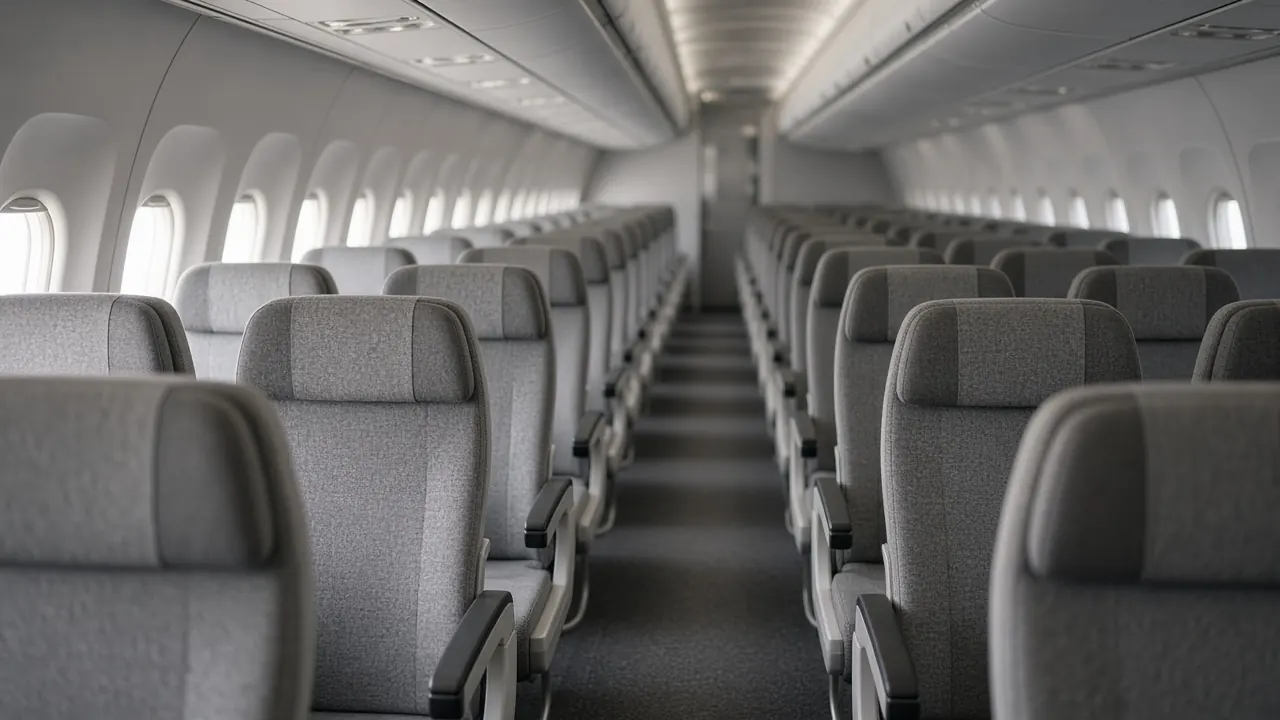
An exit row sits beside a door or an exit over the wing that people would use if the cabin had to be evacuated. Airlines sell the legroom. Regulators and crew care about whether you can help. Those are different questions, and you should answer the second one before you pay for the first. Pick Your Row drawings mark exit rows so you can see them. They are original schematics, not the airline manual, and we are not affiliated with any carrier.
For U.S. airlines operating under part 121, 14 CFR 121.585 is the public rule, linked below. An exit seat includes a seat with direct access to an exit and a seat in the row people would pass through to reach that exit. The airline may not put you there if it determines you are unlikely to perform the assist functions. The rule states that a passenger under 15 years of age is not suitable. It also covers limited strength or mobility, vision that glasses cannot correct, hearing that a hearing aid cannot cover, the ability to read the safety card and follow oral commands, and a responsibility such as caring for small children. The passenger card at the seat describes the functions, including locating the exit, operating it, judging whether opening it would increase the danger, and moving through it quickly.
You can ask to be reseated, and the rule says the airline is not supposed to demand your reason. Before taxi or pushback, a crewmember has to verify that exit seats are filled with people who can do the job. If other seats are full, the airline is told to move a willing and able passenger into the exit so you can move out. The rule does not promise a refund of a seat fee. That belongs to the airline contract.
Canadian, European, and other operators publish their own exit row conditions. If you are unsure you qualify, choose a standard row. A published limit still applies after you have paid a fee.
Pitch is often larger than the standard economy seat on that airplane, which matters when your knees already meet the seat ahead. The trade is usually storage and furniture. Tray tables often live in the armrest. Seatback pockets may be missing so nothing blocks the path. Personal items may need to go in the overhead bin for taxi, takeoff, and landing. Keep medicine and documents in a pocket you can reach without blocking the row.
Not every exit row feels the same. A door exit on a wide body can be a true open space next to a colder, louder door. An exit over the wing on a narrow body may show you mostly wing, with a hatch the passenger is expected to handle. Some cabins place two exit rows together. The row with the gap has the legroom. The row ahead of that gap can look special on a fare screen and still face a normal seatback. Read the map instead of buying the cheapest seat with the word exit in the label. How to read a seat map shows what those markers mean on our pages.
Compare the exit row with the bulkhead before you treat them as twins. Exit row versus bulkhead walks through recline, bassinets, and who should skip each one. If you only wanted to escape a reclining seat and you cannot accept exit duty, the bulkhead is usually the honest choice. Families traveling with someone under 15 should plan that bulkhead or a standard row from the start.
An extra legroom charge does not waive the rule. Our methodology explains why a high editorial score for space is not permission to sit there. Evacuation guidance linked below stresses leaving bags behind and following crew.
On our maps, exit rows are marked and often score well for space in the editorial heuristic described in how Pick Your Row scores work. Use that as a shortlist only. Open the airlines directory or a concrete hub such as best seats on Delta, find the aircraft on your ticket, and confirm the live row with the carrier. Aircraft swaps move exits. A screenshot from yesterday is not the cabin you are boarding.
FAQ
Who should skip an exit row?
Skip it if you cannot or do not want to help in an evacuation, if you are under 15, or if you are responsible for a small child. On U.S. part 121 flights those limits come from federal exit seating rules. Other airlines publish their own versions. Crew check the row before taxi and can move you even after you paid.
Is the legroom always better in an exit row?
It is often better than a standard row on the same airplane, and it is not guaranteed to feel huge. Door exits and exits over the wing differ. In a pair of exit rows, the row that still faces a seatback can miss the benefit. Look at the specific row, not the marketing name.
Can I keep a bag under an exit row seat?
Often you cannot, at least for taxi, takeoff, and landing, because the path to the exit has to stay clear. Plan to put your carry on in the bin when you board, and keep only what crew allow at your feet. Medication and documents should stay in a pocket you can reach without blocking the row.
What happens if the airline moves me out of an exit seat?
On U.S. part 121 flights the airline has to relocate you if you are unlikely to perform the functions or if you ask to move, and it is not supposed to demand your reason. Whether the seat fee comes back is an airline policy question. Check the product rules before you buy.
Are your exit row marks official?
No. Pick Your Row marks exits on original illustrative schematics so you can plan. We are not affiliated with the airline. Confirm the aircraft type and the live seat map with the carrier, because retrofits and swaps change which row is the exit.
Does paying for the exit row waive the assist rules?
No. A seat fee is a charge from the airline. It does not change the federal criteria on U.S. part 121 flights, and it does not change the exit row policy of any other airline. If you do not want the job, choose a different row before you pay.
Sources and references
Outbound links to authoritative public pages. Regulatory and consumer-rights material is fact; our seat scores remain editorial. See also the Methodology & sources page.
- U.S. eCFR — 14 CFR § 121.585 Exit seating . Federal rule defining exit seats and passenger suitability criteria for U.S. part 121 carriers (facts; not our editorial score).
- IATA — Save a Life, Not a Bag (evacuation safety) . Industry passenger education on evacuation behavior (leave bags, follow crew). Supported publicly by FAA/EASA messaging.
- U.S. DOT — Fly Rights . U.S. Department of Transportation aviation consumer protection overview for passengers.
- EASA — EU Air Passenger Rights (European Commission) . EASA topic page pointing passengers to official EU air passenger rights managed by the European Commission.
Browse airline seat maps Methodology More guides
Related guides
- Bulkhead seats: pros and cons. First row cabin seats explained, with bassinet notes, foot space, and common surprises.
- Aisle vs window: how to choose. A practical comparison of aisle and window seats for rest, access, views, and when a middle seat is still fine.
- How Pick Your Row scores work. What our 1–10 editorial seat scores mean, which tags we apply, how we separate editorial opinions from regulatory facts, and why scores are planning tools — not guarantees.
- Seat map glossary: cabin terms explained. Plain English definitions of exit row, bulkhead, pitch, layout, and other cabin terms used on seat maps.