Bulkhead seats: pros and cons
First row cabin seats explained, with bassinet notes, foot space, and common surprises.
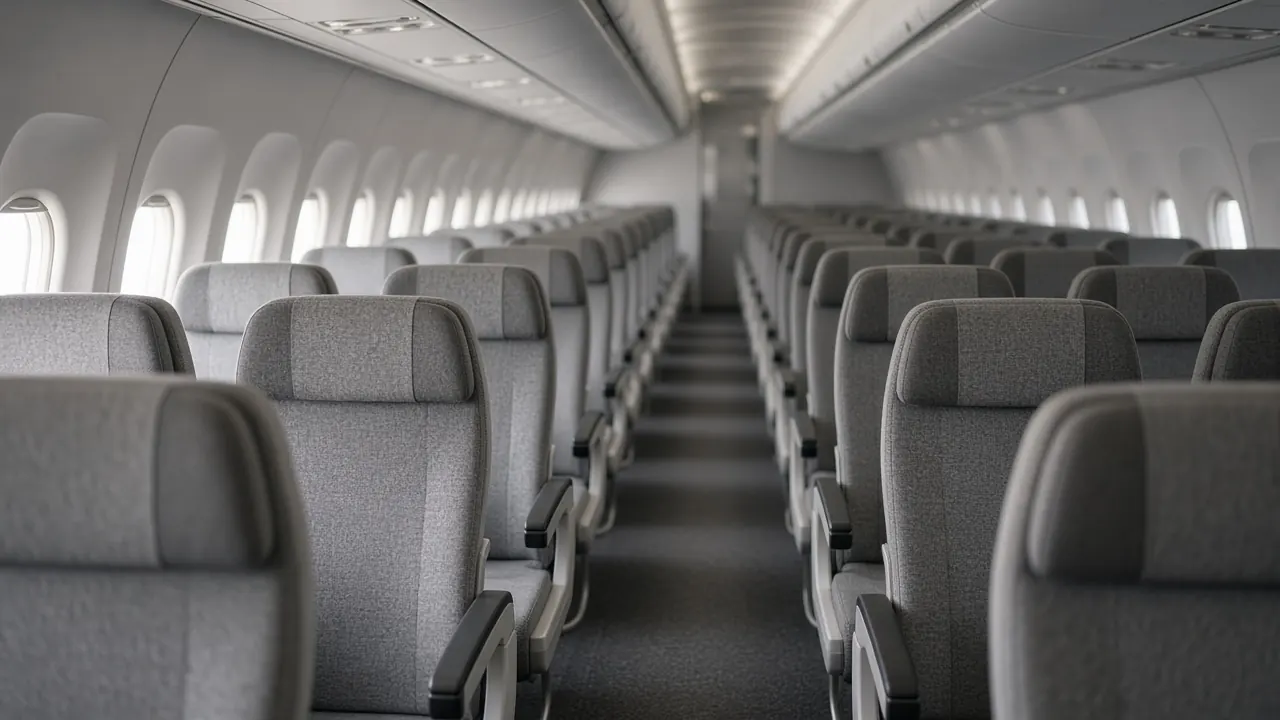
A bulkhead seat is the first row of a cabin section. You face a wall, a closet, a screen housing, or a curtain, not another passenger seatback. The person ahead cannot recline into you, because there is no person ahead. That single fact is why people love the row, and why some of them regret it an hour after departure. The picture on a seat map shows open floor. Your knees, your bag, and your tray meet the real furniture.
Your space does not shrink when someone ahead reclines, because that person is in another cabin or does not exist. On a night flight that can beat a small pitch increase in a standard row. It also does not require you to staff an emergency exit, which is why many people prefer a bulkhead when they cannot accept exit duty. Compare the two in exit row versus bulkhead.
On many bulkheads you cannot keep a bag under the seat during taxi, takeoff, and landing. There may be no seat ahead of you to slide a bag under. What you wanted at your feet goes into the overhead bin while that bin is still filling. If you travel with medicine, a laptop, or a bag for a child, pack a small item that fits the airline rule.
The seat can feel narrower than the map suggests. Tray tables often come out of the armrest, so the armrest is thicker and may not lift. A screen may sit fixed in the wall, or you may rely on your own device. With the tray down, the wall can meet your knees early. Tall travelers should compare this row with an exit row they are allowed to use. Exit row tips covers that alternative, including age and assist limits on U.S. part 121 flights.
Bassinet mounts, when the airline offers them, are almost always on a bulkhead. The crib attaches to the wall, and the adult in that seat is usually the person caring for the infant. That is a good arrangement for the family and a noisy one for the stranger who booked the same wall in order to sleep. Age limits, weight limits, and whether the fitting exists at all are airline policy. Not every bulkhead has the hardware. Read bassinet and bulkhead seats before you assume the icon will be on your flight, and confirm it in the carrier booking flow.
Listen for the galley before you celebrate the wall. A bulkhead in front of a galley gets light, conversation, and cart movement for hours. A bulkhead in front of a quiet cabin divider does not. Our editorial scores often add points for the open space and then remove points when the row is tagged near a galley or a lavatory. The method is explained in how Pick Your Row scores work and on the methodology page. The score is an opinion on a schematic. It is not a measurement of noise on your particular flight.
A bassinet bulkhead keeps an infant off an exit row. On U.S. part 121 flights a passenger under 15 may not occupy an exit seat, and an adult responsible for a small child can be moved too. A standard row where adults and children sit together can still be calmer if the only bulkhead faces the galley. Keep the adults with the child.
Some travelers find the open floor easier to enter. Others need a movable aisle armrest, and a tray armrest may not lift. Screening help at the airport is separate from which row you sit in. The TSA Cares page in the sources covers that screening help. Confirm armrests and lavatory distance with the carrier.
Pick Your Row bulkhead marks are illustrative. We are not affiliated with the airline, and two aircraft of the same type can place the wall on different row numbers after a retrofit. Use the best seats index to see which rows we score highly for a given config, then match the aircraft on a carrier page such as American Airlines seat maps. Buy only the row the live map still shows on the day you fly.
FAQ
What is a bulkhead seat?
It is the first row of a cabin section, facing a wall, divider, closet, or curtain rather than another seatback. The row ahead cannot recline into you. Storage, tray tables, and sometimes screens differ from a standard row.
Can I put a bag under a bulkhead seat?
Often you cannot, at least during taxi, takeoff, and landing. Many bulkheads have no open space under a seat in front, because there is no seat in front. Put the carry on in the overhead bin when you board and keep essential items in a small bag the airline allows.
Are bulkhead seats a good choice with a baby?
They are the usual place an airline mounts a bassinet, when that airline offers one on that aircraft. Limits on age and weight are carrier rules, and not every bulkhead has the hardware. An exit row is the wrong backup on U.S. part 121 flights when the child is under 15 or an adult is responsible for a small child.
Why can a bulkhead feel cramped?
Armrests may hold the tray and refuse to lift, which narrows the living space. A wall or screen housing can meet your knees once the tray is down. The empty floor in the seat map icon is not a promise of unlimited legroom.
Are bulkhead seats quiet?
Only when the wall in front of them is quiet. A bulkhead facing a galley or sitting beside a lavatory collects light, voices, and foot traffic. A bulkhead between cabins, away from service areas, is the calmer version. Check the map symbols, not only the word bulkhead.
Sources and references
Outbound links to authoritative public pages. Regulatory and consumer-rights material is fact; our seat scores remain editorial. See also the Methodology & sources page.
- U.S. eCFR — 14 CFR § 121.585 Exit seating . Federal rule defining exit seats and passenger suitability criteria for U.S. part 121 carriers (facts; not our editorial score).
- U.S. DOT — Fly Rights . U.S. Department of Transportation aviation consumer protection overview for passengers.
- Your Europe — Air passenger rights . Official EU consumer summary of Regulation (EC) No 261/2004 rights (delays, cancellations, denied boarding, downgrades).
- TSA — TSA Cares (passengers who need assistance) . U.S. TSA program and guidance for travelers who need screening assistance (mobility and medical context).
Browse airline seat maps Methodology More guides
Related guides
- Exit row tips before you select. What exit row seats usually mean for space, rules, storage, and who should skip them.
- Aisle vs window: how to choose. A practical comparison of aisle and window seats for rest, access, views, and when a middle seat is still fine.
- How Pick Your Row scores work. What our 1–10 editorial seat scores mean, which tags we apply, how we separate editorial opinions from regulatory facts, and why scores are planning tools — not guarantees.
- Seat map glossary: cabin terms explained. Plain English definitions of exit row, bulkhead, pitch, layout, and other cabin terms used on seat maps.