Aisle vs window: how to choose
A practical comparison of aisle and window seats for rest, access, views, and when a middle seat is still fine.
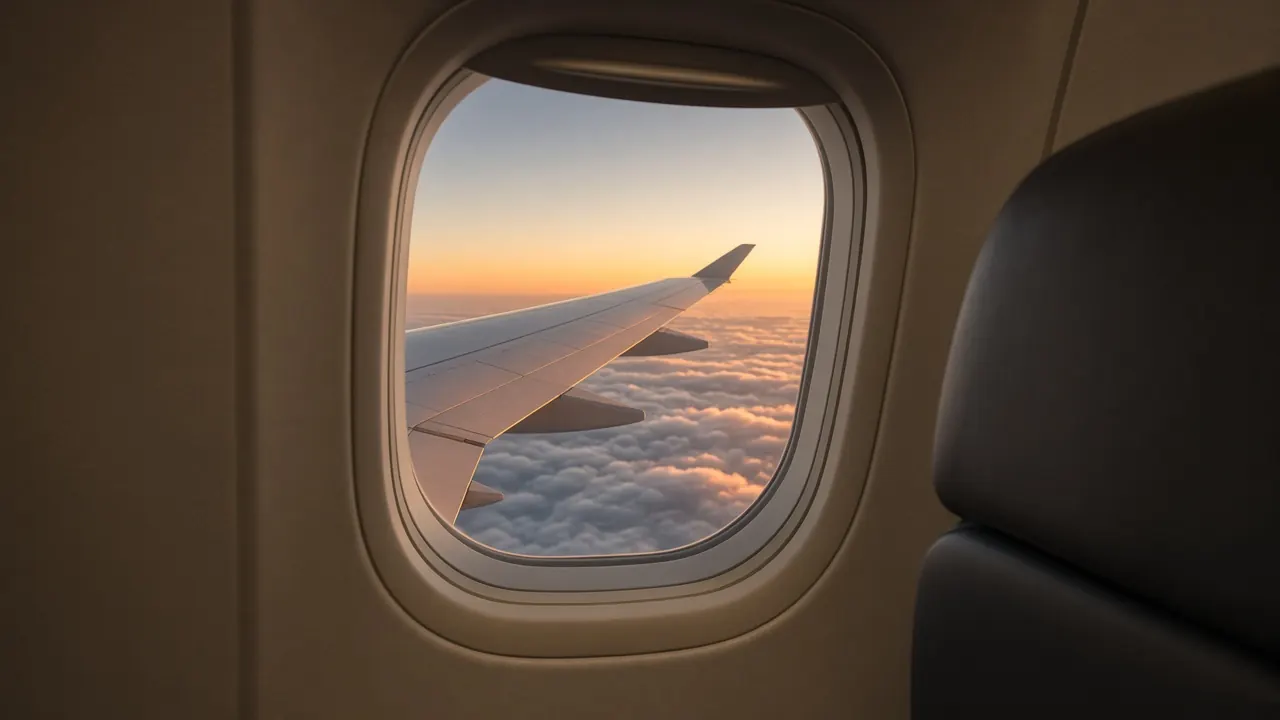
The choice between an aisle and a window is a choice about what you will give up on this flight. A window seat gives you a sidewall to lean on, a shade you can control, and a row that does not climb over you when someone needs the lavatory. An aisle seat gives you the freedom to stand, stretch, and leave without asking anyone to move. The better letter matches the length of the flight, how often you get up, and whether you need to be in the terminal quickly when the door opens.
Window seats favor rest on anything longer than a short hop. You can angle a shoulder into the wall, keep cabin lights out of your face, and stay seated while carts pass. On a full flight your neighbors have to stand, shift a bag, and sit down again. Put a charger, medication, and a snack in the seatback pocket before departure so a small need does not become a favor you have to ask for.
Aisle seats favor mobility and a faster exit. You can reach the lavatory without a negotiation, and on most single aisle jets you join the flow of people leaving the airplane instead of waiting for it to reach you. Service carts meet the aisle shoulder. People stand beside you during boarding and again while they wait for a bin. If you startle easily or you planned to sleep, those interruptions are the flight.
The middle seat gives up the wall and the free path. On a cabin of three seats, an aisle, and three seats, the middle of each triple is the letter most travelers try to avoid. It can still be the right seat when your group fills the whole side, because then you are sitting between people you know. If you are stuck in the middle, choose the calmer row, away from lavatories and galleys, rather than a middle glued to a service zone.
Couples often want one window and one aisle so a stranger is not sitting between them. That pair works cleanly in a two seat block, which you see on the sides of some wide body cabins. On a three seat side the pair does not exist. Booking the window and the aisle and hoping the middle stays empty fails when the flight is full. Two aisle seats across from each other keep both people mobile and still close enough to talk.
Overnight flying pushes many people toward the window, because uninterrupted sleep beats a view you will not look at. Choose an aisle instead if you wake often, if you need to walk, or if a connection waits on the other side of landing and you cannot afford to wait for two people to stand. A short domestic red eye and a long haul overnight are different trips that share this letter choice. The shorter one is covered in the red eye seat strategy guide.
An aisle in an exit row can look like the perfect mix of space and access. On U.S. airlines operating under part 121, federal rules limit who may sit in an exit seat, including a minimum age, and the airline can move you if you are unlikely to help in an evacuation. A standard aisle with ordinary pitch is a better plan than an exit aisle you are not allowed to keep. Many exit seats send your bag to the bin for taxi, takeoff, and landing. The practical version of those limits is on exit row tips.
A window letter is a position, not a promise of scenery. The outer seat can face the wing, a door surround, or a blank panel. If you are paying because you want to look outside, read how to read a seat map and then confirm the pane on the airline map for your aircraft. A quiet window beside a lavatory can feel worse than an aisle in a calm stretch of cabin, and a forward aisle can sit next to a galley that stays bright.
Our editorial scores weigh the same things: letter, space, and nearby traffic. They tend to prefer a clear window or aisle and to mark middles and seats by lavatories or galleys as weaker defaults. That math is an opinion, explained in how Pick Your Row scores work. We are not affiliated with any airline. Use a best seats page as a shortlist, buy the seat in the carrier booking flow, and check the live map again if the aircraft changes.
FAQ
Is a window or an aisle better for sleeping?
A window is usually better when you want to sleep through the flight. You can lean on the sidewall, control the shade, and avoid being climbed over. Choose an aisle if you wake often or you need to walk. A middle seat is the weakest sleep choice on a full flight unless you are sitting between people you know.
Which seat should I pick for a tight connection?
An aisle toward the front of the cabin usually gets you into the aisle and off the airplane sooner than a window in the back. The time you save is minutes, not a guarantee that you will make the connection. Immigration, a terminal change, and a late arrival can erase a good seat. If the connection is the point of the trip, favor the aisle on the flight that lands into it.
When is a middle seat acceptable?
A middle seat is acceptable on a short flight, when the fee to move is high for the time you will sit there, or when your group fills the seats on either side. It is a poor default on an overnight flight. If you are stuck in one, keep essentials in the seatback pocket and pick a calmer row away from galleys and lavatories.
Do aisle seats get hit by service carts?
Yes, carts, bags, and passing passengers meet the aisle shoulder and elbow. That contact is the price of being able to stand up freely. A window avoids it and costs you a favor from your neighbors every time you leave the row. If you sleep lightly, those bumps matter more than the map suggests.
Does a window seat always have a view?
No, the window letter only means you sit on the outside of a seat block. The wing, an exit door, or a structural panel can leave you looking at metal or a partial pane. If the view is why you are paying, confirm it on the airline map for your aircraft. If sleep is why you are paying, the wall matters more than the glass.
How should couples choose between an aisle and a window?
In a two seat block, take the pair: one window and one aisle, with no stranger between you. On a three seat side, that pair does not exist. Two aisle seats across the aisle keep you close and mobile. Hoping a middle seat stays empty between two seats you booked is a weak plan on a full flight.
Sources and references
Outbound links to authoritative public pages. Regulatory and consumer-rights material is fact; our seat scores remain editorial. See also the Methodology & sources page.
- U.S. DOT — Fly Rights . U.S. Department of Transportation aviation consumer protection overview for passengers.
- FAA — Travelers . FAA public traveler safety and consumer information hub.
- Your Europe — Air passenger rights . Official EU consumer summary of Regulation (EC) No 261/2004 rights (delays, cancellations, denied boarding, downgrades).
- FAA passenger safety briefing AC 121-24E . FAA advisory circular on passenger safety information briefings and exit seating expectations.
- FAA exit seating report excerpt . FAA public report discussing exit seat duties under 14 CFR 121.585.
- IATA passenger experience overview . IATA passenger programs overview (industry context for cabin and passenger processes).
Browse airline seat maps Methodology More guides
Related guides
- Exit row tips before you select. What exit row seats usually mean for space, rules, storage, and who should skip them.
- Bulkhead seats: pros and cons. First row cabin seats explained, with bassinet notes, foot space, and common surprises.
- How Pick Your Row scores work. What our 1–10 editorial seat scores mean, which tags we apply, how we separate editorial opinions from regulatory facts, and why scores are planning tools — not guarantees.
- Seat map glossary: cabin terms explained. Plain English definitions of exit row, bulkhead, pitch, layout, and other cabin terms used on seat maps.