Seat map glossary: cabin terms explained
Plain English definitions of exit row, bulkhead, pitch, layout, and other cabin terms used on seat maps.
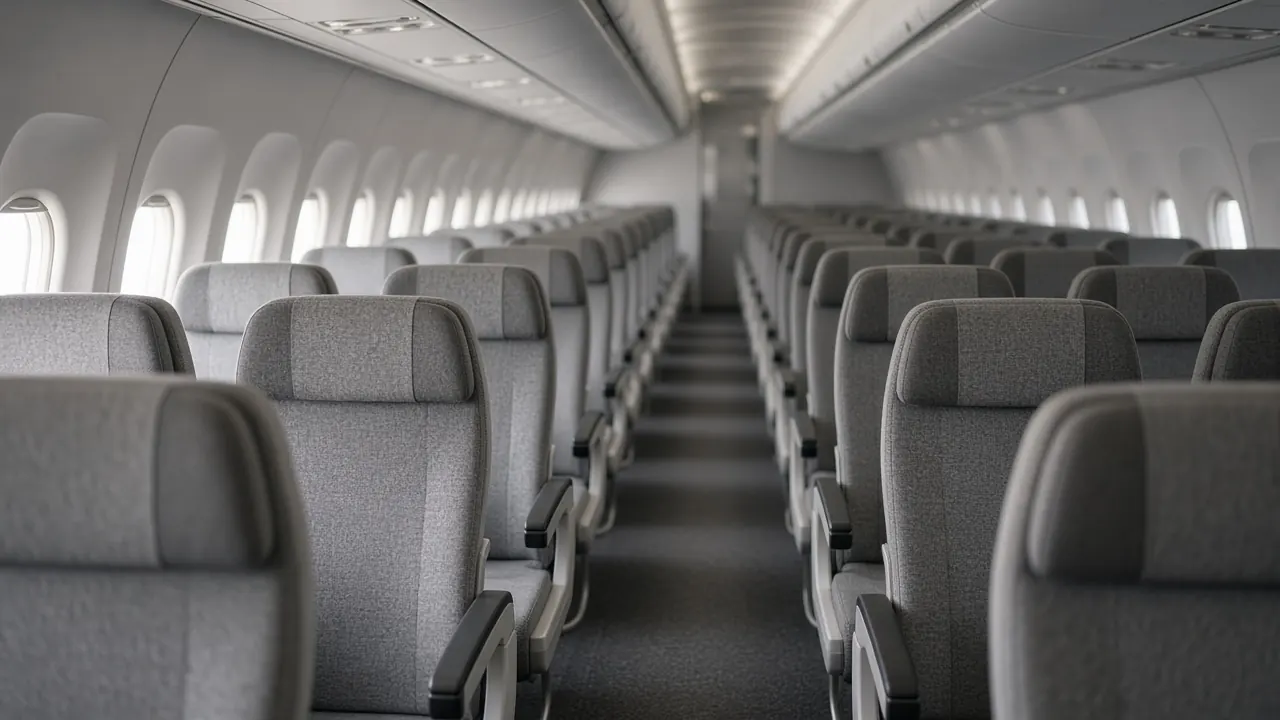
This glossary explains how we use cabin words on our schematics so you can read a map without guessing at the labels. Where a term touches a regulation or a public safety campaign, we point at that source and we do not turn it into a private rule. If you want the picture version of these ideas, start with how to read a seat map. If you want the scoring math, use the methodology page.
On U.S. airlines that operate under part 121, 14 CFR 121.585 defines exit seats and who may sit in them. The rule covers a seat with direct access to an exit and a seat in the path other people would cross to reach that exit. A passenger under 15 years of age may not sit there. The airline also has to judge whether someone can perform the assist functions, including when that person is caring for a small child. Read exit row tips before you buy, and use the regulation link in the sources on this page.
Bulkhead is our geometry word for the first row of a cabin section, facing a wall, a closet, a screen housing, or a curtain. Nobody in front of you can recline into your knees, because there is no passenger seatback there. The tray table may live in the armrest, which can make the seat feel narrower.
Pitch, in ordinary industry usage, is the distance from a point on one seat to the same point on the seat ahead. Cushion thickness, the curve of the seatback, and a hard wall in a bulkhead can make the same published pitch feel different in your knees. Our maps do not claim certified measurements, and we do not invent a precise figure for a seat we have not measured.
We describe a cabin by counting the seats in each block, from the left side to the right side as you look toward the nose, with aisles in the gaps. A common single aisle jet shows three seats, an aisle, and three seats. A wide body might show two, an aisle, four, an aisle, and two, or three, an aisle, three, an aisle, and three. Those counts describe geometry only.
On our schematic a window letter is the outermost letter in that seat block. An aisle letter touches a gap. A middle letter sits between other seats. Window means a position against the sidewall. The wing, a door, or a structural panel can leave an outer seat with a poor view or no view. Aisle means you can stand without a negotiation, and it also means carts and passing people meet your shoulder. Choose the word for the problem you have, then check what sits beside that letter.
Galley and lavatory markers are abstract symbols for crew work areas and restrooms, not a measured floor plan of one registration. Crew prepare carts and spend long stretches in the galley. Passengers queue at the lavatory, including overnight when you hoped the cabin would be still. A seat one or two rows away can be a useful compromise if you need the lavatory often and you still want a buffer. The symbol is a planning clue.
We use first, business, premium, and economy as schematic zones so you can see where one product ends and the next begins. A domestic first seat can be a wide recliner on a single aisle jet. Premium economy is usually its own cabin with more pitch or width. It is not the same thing as a paid extra legroom seat that still sits inside economy, often at an exit. The cabin class primer is the longer explanation of what usually changes between those zones.
Two aircraft sold under the same type name can have different interiors after a retrofit or because the airline flies more than one cabin on that type. An exit on the jet you flew last year is not a promise about the tail number tomorrow. Every Pick Your Row map is an illustrative reconstruction of a typical public layout pattern. Confirm the aircraft on your booking, then confirm the live seat map on the day you fly, especially after a schedule change email.
Rules about delays, cancellations, denied boarding, and downgrades come from public consumer pages, including the U.S. DOT Fly Rights guide and the European Your Europe air passenger pages linked below. Those topics are separate from which row feels comfortable. A preferred seat is often standard pitch in a popular spot, such as forward in the cabin or on the aisle. Extra legroom is a claim about space, often at an exit or a bulkhead, and it can come with duties and bag limits.
FAQ
What is an exit row?
An exit row sits beside a door or an exit over the wing that would be used in an evacuation. The legroom is often better than a standard row, and the rules are stricter. On U.S. part 121 flights, federal exit seating rules set a minimum age of 15 and require that you can perform assist functions. Other airlines publish their own conditions, and a seat fee does not waive them.
What is a bulkhead seat?
It is the first row of a cabin section, facing a wall, divider, closet, or curtain instead of another passenger seatback. The row ahead cannot recline into you. Storage under the seat and the tray table often work differently, and some of these walls accept a bassinet. The open space on a map can still feel tight once the tray is down.
What does seat pitch mean?
Pitch is the distance from a point on one seat to the same point on the seat in front of it. People treat it as legroom, but cushion shape and a hard wall can change how that distance feels. Our maps do not publish certified pitch measurements. Use an airline figure when you need a number, and use the map to see exits, walls, and aisles.
How do I read a cabin layout on a seat map?
Count the seats in each block from the left side to the right side as you look toward the nose, and treat the gaps as aisles. Three seats, a gap, and three seats is a typical single aisle cabin, and wider jets add a second aisle and another block. The count tells you the geometry. It does not tell you the pitch, the noise, or whether the window glass lines up.
Does a window letter mean I will have a view?
No, on our pages a window letter is only the outer seat in that block. You might face a clear pane, the wing, a door structure, or a blank panel. If the view matters, confirm it on the airline map for your aircraft. If you only wanted a wall to lean on, the letter still does that job even when the glass disappoints.
Are these definitions official airline policy?
No, this is an editorial glossary for reading Pick Your Row schematics. Regulatory points, such as U.S. exit seat criteria, are summarized here and linked to the public rule. Comfort notes are our opinions, and we are not affiliated with any airline. The carrier seat map and the carrier contract govern the seat you buy.
Sources and references
Outbound links to authoritative public pages. Regulatory and consumer-rights material is fact; our seat scores remain editorial. See also the Methodology & sources page.
- U.S. eCFR — 14 CFR § 121.585 Exit seating . Federal rule defining exit seats and passenger suitability criteria for U.S. part 121 carriers (facts; not our editorial score).
- IATA — Save a Life, Not a Bag (evacuation safety) . Industry passenger education on evacuation behavior (leave bags, follow crew). Supported publicly by FAA/EASA messaging.
- Your Europe — Air passenger rights . Official EU consumer summary of Regulation (EC) No 261/2004 rights (delays, cancellations, denied boarding, downgrades).
- U.S. DOT — Fly Rights . U.S. Department of Transportation aviation consumer protection overview for passengers.
- ICAO — Safety . International Civil Aviation Organization public safety portal (standards framework; not a seat map).
Browse airline seat maps Methodology More guides
Related guides
- Exit row tips before you select. What exit row seats usually mean for space, rules, storage, and who should skip them.
- Bulkhead seats: pros and cons. First row cabin seats explained, with bassinet notes, foot space, and common surprises.
- Aisle vs window: how to choose. A practical comparison of aisle and window seats for rest, access, views, and when a middle seat is still fine.
- How Pick Your Row scores work. What our 1–10 editorial seat scores mean, which tags we apply, how we separate editorial opinions from regulatory facts, and why scores are planning tools — not guarantees.