Family Mezzanine Suites: A Kids Loft Above the Parents Row
A speculative look at widebody family suites where children sleep in a small loft tucked into the crown space above their parents seats, turning unused ceiling height into rest without giving up floor seats.
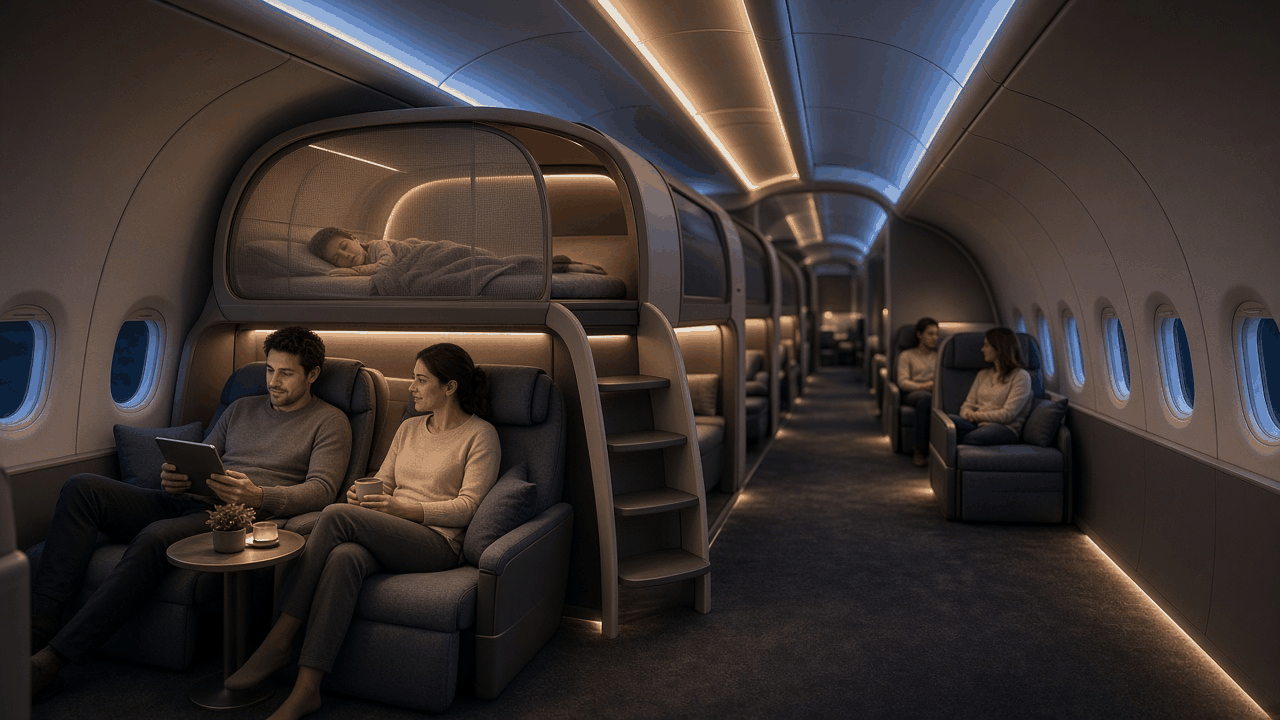
Flying long haul with small children is mostly a sleep problem. A toddler who will not settle in an upright seat can turn a twelve hour night into a very long day for the whole row, and for the rows around it. Today the answers are bassinets at the bulkhead, a lie flat seat for the price of a used car, or a parent holding a child for hours. So here is a Pick Your Row thought experiment aimed straight at that problem: family mezzanine suites, where kids sleep in a small loft above their parents row.
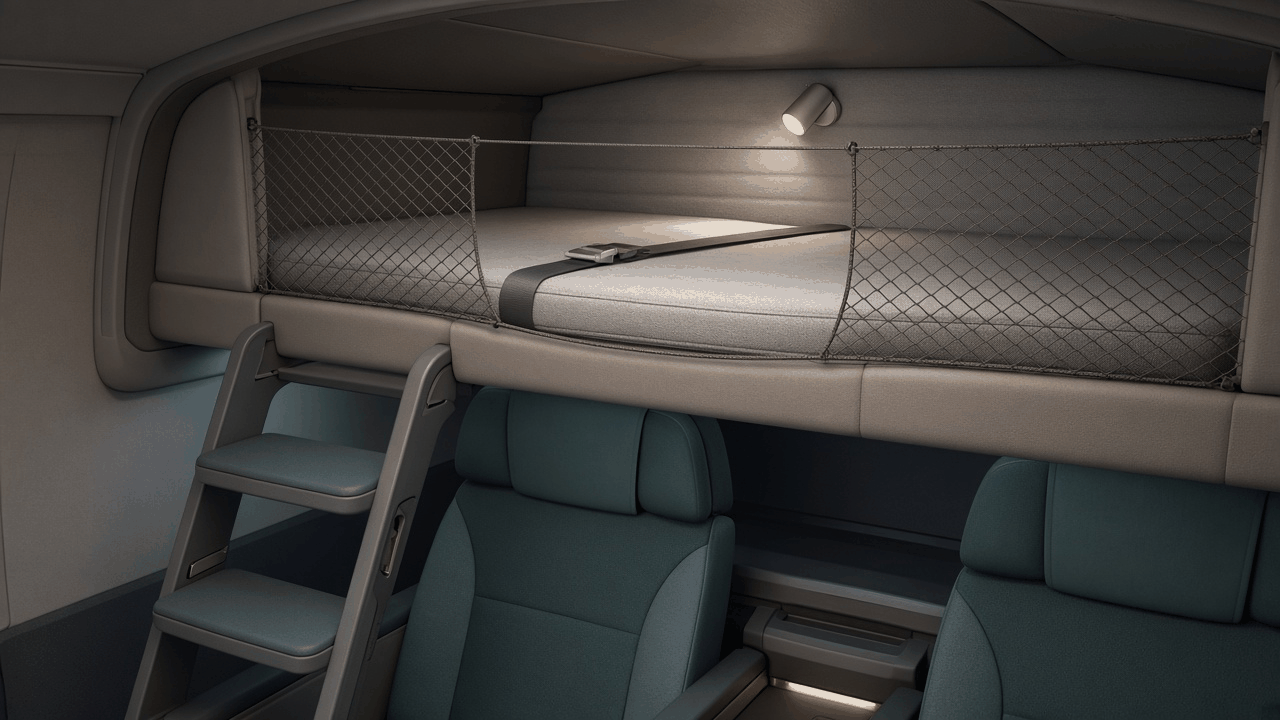
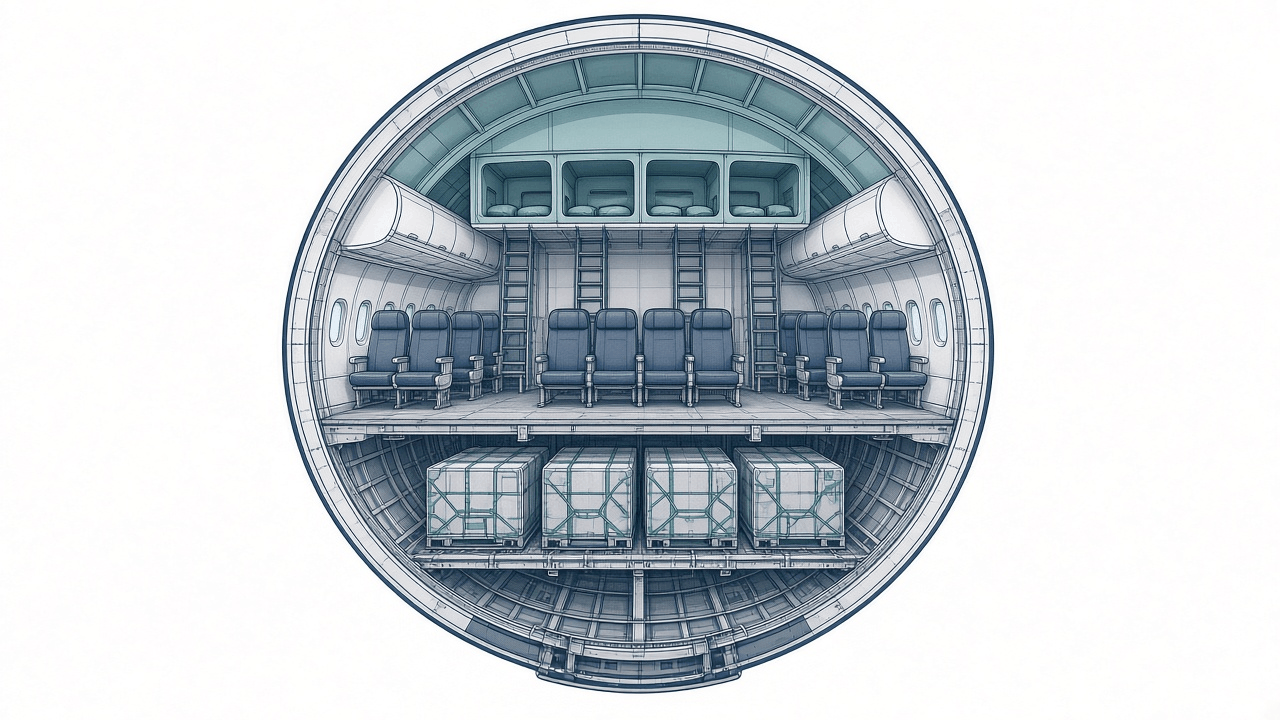
Picture the center section of a widebody at night. At floor level the parents sit in ordinary premium economy style seats, side by side, with the usual tray tables and screens. Directly above them, in the tall crown space where the center overhead bins normally hang, sits a padded child sized loft. It is short and narrow by adult standards, but plenty for a sleeping four year old. A short fold out ladder links the two levels, and a soft net plus a restraint strap keep the child in place. During taxi, takeoff, landing, and turbulence the child comes down and sits in a real seat with a real belt, so the loft is a bed for cruise only.
Why does the geometry tempt designers? Widebody cabins have a lot of height in the middle that passengers never use. The crown above the center seats mostly holds bins, ducts, and lighting. Children are small, so a bed that would be useless for an adult can work for a child inside that leftover volume. The floor footprint does not grow. The family still buys the same number of seats on the seat map, they just gain a second level where the youngest traveler can lie flat.
Why do airlines not do more of this already? A few carriers have tried family friendly ideas such as couch style economy rows that convert into a flat surface, and crew rest bunks already live in hidden crown areas on some long haul jets. So the pieces exist. The hard leap is putting a passenger occupied space above another passenger in the main cabin. Certification has strong opinions about that. Every occupant needs a certified restraint for taxi, takeoff, and landing. A loft would also need fire resistant materials, oxygen mask coverage, lighting, smoke detection, and a way for crew to see and reach a child quickly. Evacuation rules ask that a full cabin can leave within strict time limits, and a ladder in the aisle line is the kind of obstacle that makes engineers nervous.
Trade offs pile up fast. Center bins disappear, so families lose overhead space exactly when they carry the most bags. Structure gets heavier because a loft must carry loads that a bin never sees, and that mass sits high in the fuselage, which affects floor beams, ceiling mounts, and center of gravity planning. Boarding and turn times suffer if crews must inspect, clean, and reset each loft. Revenue density is a mixed story. The airline keeps its seat count on the floor, but it may need a pricing product that is hard to explain, and a loft that sits empty on a business heavy route is dead weight. There is also the human factor. Some parents will love a child asleep right above them. Others will not want their child out of arm reach at all.
If a design ever made it through certification, the traveler trade offs would look familiar to anyone who studies seat maps. The best family rows would still be the ones near lavatories but not beside the galley noise, away from the busiest cross aisles, and close enough to an exit to feel calm. Our editorial scores still assume today real seats. For practical advice on flying with children right now, see choosing seats with kids and bassinet bulkhead seats.
For travelers, the useful takeaway is simple. A family mezzanine suite is a design brief, not a booking tip. The real lesson is that cabin volume above your head is valuable, and today most of it goes to bags. For related speculative cabin ideas on this site, see Lower Deck Sleeper Pods, Rotating Privacy Shells, Capsule Bunks Over the Wing, Herringbone Economy Sleepers, and The Skyscraper Seat.
Pick Your Row publishes original cabin schematics and editorial guides for Joshua Israel Ventures LLC. We are not affiliated with any airline. Speculative concepts like this one are labeled clearly so they never get confused with live fleet maps.
Sources and references
Outbound links to authoritative public pages. Regulatory and consumer-rights material is fact; our seat scores remain editorial. See also the Methodology & sources page.
- U.S. eCFR 14 CFR 25.803 Emergency evacuation . Transport category evacuation requirements. Any loft above a seat row would still have to fit inside the full cabin evacuation demonstration.
- U.S. eCFR 14 CFR 121.311 Seats, safety belts, and shoulder harnesses . Rules on seats and approved child restraint systems. A loft could only ever be a cruise bed, with children back in a certified seat for taxi, takeoff, and landing.
- FAA Flying with Children . FAA guidance for families. A reminder that the safest place for a small child during critical phases of flight is a proper restraint.
- IATA Evacuation safety education . Public industry messaging on evacuation behavior, relevant to any idea that adds levels or ladders inside the cabin.
- ICAO Safety . International safety framework portal. Lofts above passengers are a standards problem, not just a design sketch.
Browse airline seat maps Methodology More guides
Related guides
- Exit row tips before you select. What exit row seats usually mean for space, rules, storage, and who should skip them.
- Bulkhead seats: pros and cons. First row cabin seats explained, with bassinet notes, foot space, and common surprises.
- Aisle vs window: how to choose. A practical comparison of aisle and window seats for rest, access, views, and when a middle seat is still fine.
- How Pick Your Row scores work. What our 1–10 editorial seat scores mean, which tags we apply, how we separate editorial opinions from regulatory facts, and why scores are planning tools — not guarantees.