Lower Deck Sleeper Pods: Turning the Cargo Hold Into a Bunk Room
A speculative look at container sized sleeper modules that load into a widebody belly hold, so economy travelers could rent a flat bunk for a few hours of cruise without the airline giving up a single main deck seat.
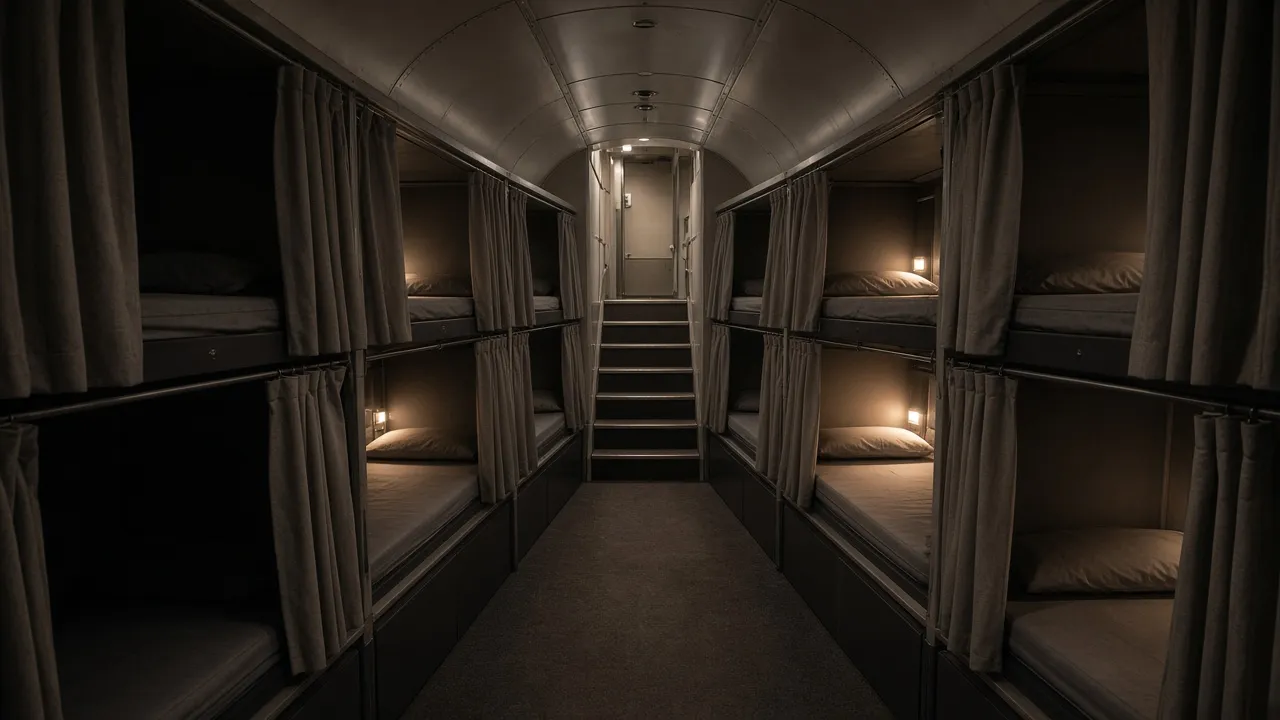
Every long haul economy passenger knows the moment around hour six when sitting upright stops feeling like a seat and starts feeling like a test. Lie flat beds fix that, but they live upstairs at business class prices. So this week the Pick Your Row thought experiment goes downstairs instead: lower deck sleeper pods, where part of the cargo hold becomes a bunk room you can rent for a few hours of cruise.
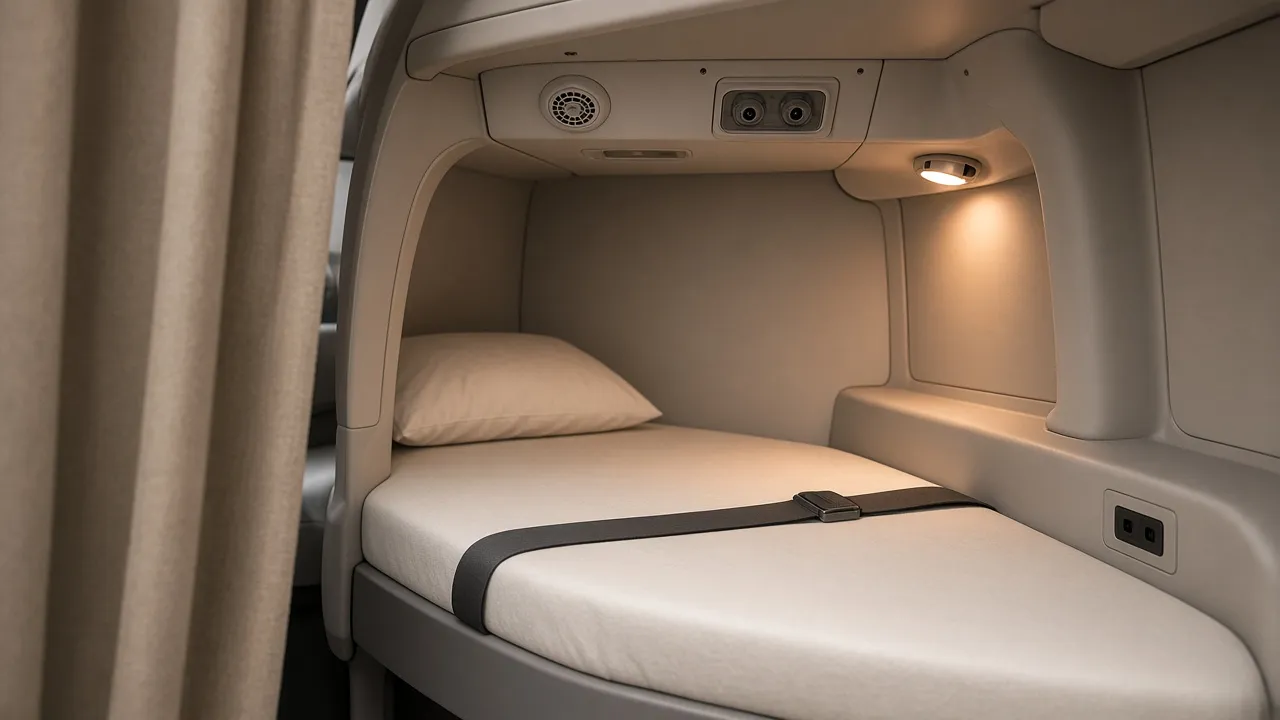
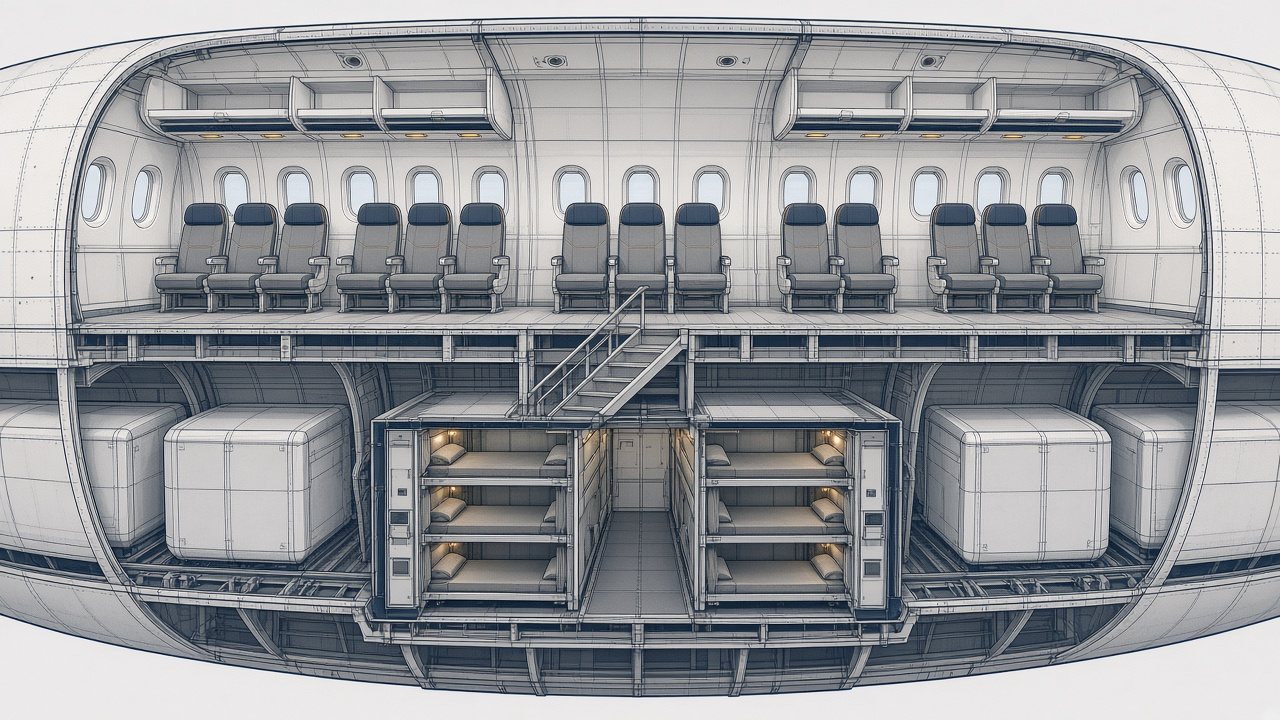
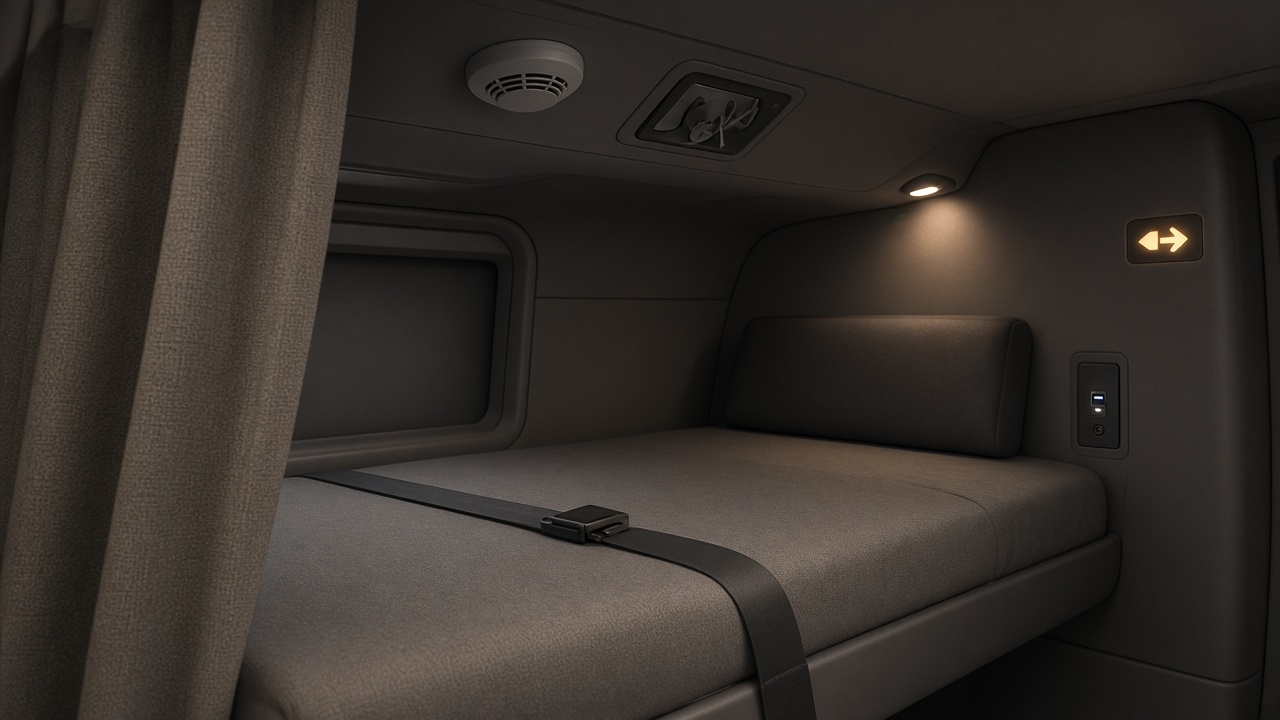
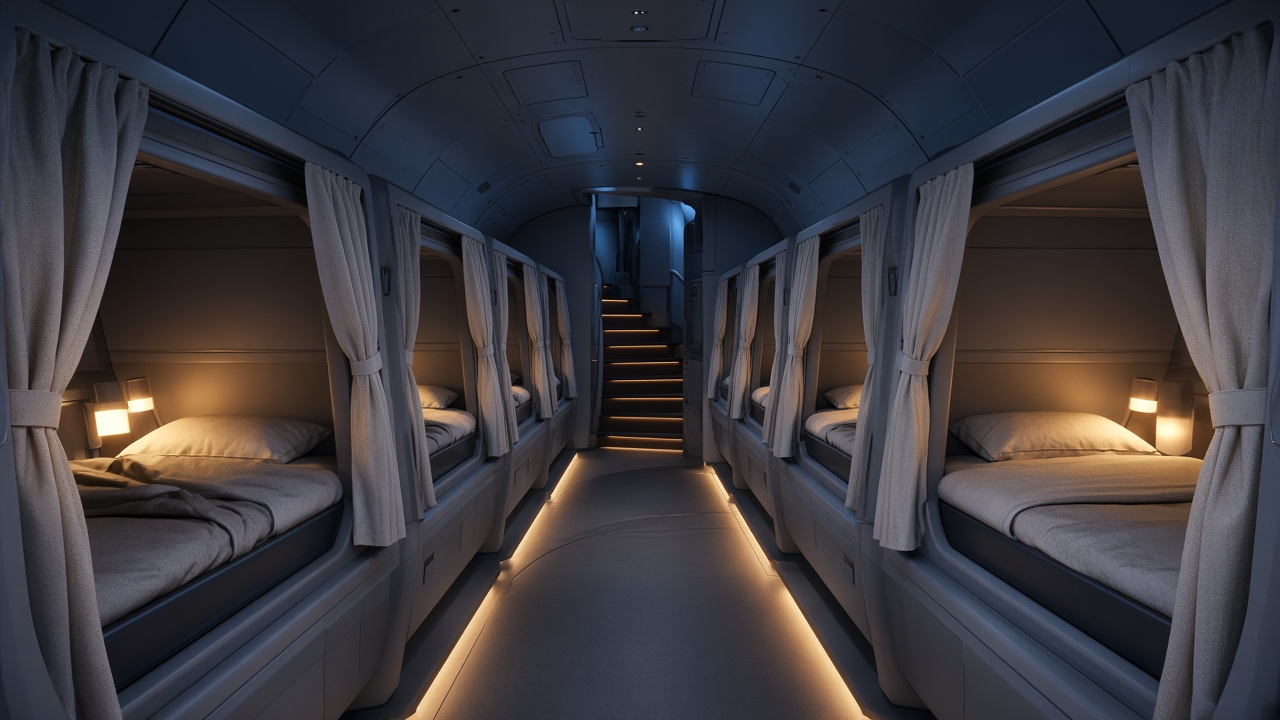
Here is the idea. A widebody belly is built to carry standard cargo containers that roll in on a floor of rollers and lock into place. Imagine a sleeper module the same size as a few of those containers. Inside are two tiers of short enclosed bunks on each side of a narrow walkway, each with a flat mattress, a curtain, a reading light, and a charging port. A stair links the module to the main deck near a galley. You book a normal economy seat, then add a four hour sleep block. After the meal service you go downstairs, sleep flat, and come back up to your seat before descent.
Why does the geometry tempt designers? Cabin space upstairs is the most expensive real estate on the aircraft, because every square meter there can hold a paid seat. The belly is cheaper volume. On many passenger flights the hold is not full of freight, and a module that loads like a container could, in theory, go in for a night flight and come out for a cargo heavy day route. Nobody gives up a seat on the main deck seat map. The airline simply sells the same passenger twice, once for a seat and once for a bed.
Why do airlines not do more of this already? Parts of it exist. Some long haul jets already carry crew rest compartments outside the main cabin, and seat makers and airframers have shown lower deck module concepts at industry events over the years. The hard part is putting paying passengers below the floor. A cargo hold is designed around fire containment for freight, not people. A passenger space down there needs its own smoke detection, fire resistant materials, oxygen for every occupant, emergency lighting, communication with the crew, and a route out that works in smoke and in the dark. The rules on lower deck service compartments already restrict who can be down there and when, and occupied bunks would be a much bigger ask.
The trade offs keep stacking up. Evacuation is the biggest one. Every passenger in a bunk room still has to be part of a cabin that can empty within strict time limits, and a single stair is a choke point. Most likely the bunks would be closed for taxi, takeoff, landing, and turbulence, so every sleeper also needs a real seat upstairs. Weight is next. A module with structure, ventilation, plumbing for oxygen, and interiors weighs far more than the freight it replaces, and that freight was earning money. Center of gravity planning gets harder when a block of mass in the belly can be full or empty. Turn times suffer if crews must strip and remake twenty beds. And revenue density only works if enough people pay for sleep every single night on that route.
There is also a quieter question about bags. If the module takes container positions, checked luggage and cargo capacity both shrink. On a full flight that can mean bags left behind or freight bumped, which is exactly the kind of irregular operation airlines try hardest to avoid. That is why concepts like this tend to show up in renders and trade show booths far more often than in real cabins.
If a version ever flew, the seat you book upstairs would still matter. You would want a seat near the stair, away from the busiest galley traffic, so the walk down and back is short and quiet. Our editorial scores still assume today real seats. For practical advice right now, see noise near galleys and lavatories and jet lag and cabin position.
For travelers, the useful takeaway is simple. A lower deck sleeper pod is a design brief, not a booking tip. The real lesson is that the belly of a widebody is a huge volume that passengers never see, and every idea for using it runs straight into fire, oxygen, and evacuation rules. For related speculative cabin ideas on this site, see Family Mezzanine Suites, Rotating Privacy Shells, Capsule Bunks Over the Wing, Herringbone Economy Sleepers, and The Skyscraper Seat. Next in the series, Window Wall Daybeds lays the bed along the cabin wall instead.
Pick Your Row publishes original cabin schematics and editorial guides for Joshua Israel Ventures LLC. We are not affiliated with any airline. Speculative concepts like this one are labeled clearly so they never get confused with live fleet maps.
Sources and references
Outbound links to authoritative public pages. Regulatory and consumer-rights material is fact; our seat scores remain editorial. See also the Methodology & sources page.
- U.S. eCFR 14 CFR 25.819 Lower deck service compartments . Existing rules for occupied spaces below the main deck, including exits, communication, and limits on occupancy during critical phases of flight.
- U.S. eCFR 14 CFR 25.857 Cargo compartment classification . How cargo holds are classified for fire detection and suppression. A sleeper module would have to answer a very different fire safety question than freight does.
- U.S. eCFR 14 CFR 25.803 Emergency evacuation . Transport category evacuation requirements. Any bunk room below the floor would still need to fit inside the full cabin evacuation picture.
- IATA Evacuation safety education . Public industry messaging on evacuation behavior, relevant to any idea that sends passengers down a stair inside the aircraft.
- ICAO Safety . International safety framework portal. Passengers sleeping in the hold is a standards problem, not just a design sketch.
Browse airline seat maps Methodology More guides
Related guides
- Exit row tips before you select. What exit row seats usually mean for space, rules, storage, and who should skip them.
- Bulkhead seats: pros and cons. First row cabin seats explained, with bassinet notes, foot space, and common surprises.
- Aisle vs window: how to choose. A practical comparison of aisle and window seats for rest, access, views, and when a middle seat is still fine.
- How Pick Your Row scores work. What our 1–10 editorial seat scores mean, which tags we apply, how we separate editorial opinions from regulatory facts, and why scores are planning tools — not guarantees.